A story about motherhood, chosen family and the courage to become soft
I have known Doris for most of my life.
There are parts of her story I witnessed and parts I understood only years later. I knew the young woman full of life and adventure. I watched her become a mother and build a life around her daughter, Eva.
But long before Doris began building a village for her daughter, she was learning what community could mean.

After graduating from high school, Doris was unsure of what she wanted her life to become. She enrolled in culinary school and eventually began working at the Westin Harbour Castle in Toronto. She was earning good money and meeting interesting people, but something within her remained unsettled.
“I had this epiphany,” she says. “I thought, I don’t know if this is what I want to do. I knew I wanted to travel, but I didn’t know how.”
Through a church, she discovered an international service exchange. It was not a religious mission. Participants from different countries exchanged places for a year, each entering another person’s community to serve where help was needed.
One of the available placements was in Brazil, working at a community center for sex workers and their children.
Doris applied.
The center was located inside a favela and provided a safe place where women could leave their children while they worked. Some children remained there overnight. Doris helped care for them, cooked, cleaned and did whatever else the community required.
The program covered her accommodation through local hosts who already worked at the center. Living alongside them gave Doris something no classroom could have offered: an intimate education in how a community cares for its own.
She met midwives, doulas and traditional healers. She encountered ancestral knowledge about women’s bodies, pregnancy and birth. As her responsibilities grew, she also began supporting pregnant women who could not access hospital care, helping create a place where they could give birth safely and with dignity.
This was years before Doris became a nurse or a doula. Years before she gave birth to Eva. But the roots of that calling were already forming.
Her placement was supposed to last one year.
Doris stayed for three.
““It was probably the best experience I ever had in my life,” she says. “I think Brazil chose me. I didn’t choose Brazil.””
She does not romanticize the experience. Life in the favela could be dangerous. She heard gunshots and was robbed at gunpoint more than once. Looking back now as a mother, she admits that if Eva proposed the same journey, her first instinct might be to say no.
But Doris had always possessed a rebellious kind of courage. When she believed she needed to do something, she found a way to do it. Her parents worried and pleaded with her not to leave, but she saved the money for her flight and went.
It was through her work at the centre that Doris met Eva’s father. He was a paramedic who volunteered his time providing health education and care to the women in the community. Their relationship gave Doris another reason to remain in Brazil, but love was not what originally brought her there.
Purpose was.
Community was.
And it was there, inside that community, that Doris conceived Eva.
When Doris discovered that the relationship was not what she had believed it to be, she faced a decision that would shape the rest of her life. Approximately six months pregnant, she left Brazil and returned to Canada.
It is difficult not to imagine that flight: a young woman returning to the home she had once been determined to leave, carrying a baby and the remains of a future that no longer existed. Whatever fear and uncertainty accompanied her onto that plane, also carried the first expression of the mother she would become.
She chose the life she believed was right for her daughter, even when it meant facing that life without a partner.
“I remember flying into Canada and having that moment of: Okay, how am I going to do this on my own? How am I going to navigate this?”
Doris had family and friends she could lean on, but she understood that the defining decisions ahead would belong to her.
When she thinks back to the woman she was when Eva was born, Doris remembers someone adventurous and intuitive, but also young, naïve and afraid of what came next.
She did not have endless advice arriving through social media platforms. There was no immediate online answer for every fear. What she had was her body and the internal voice telling her to trust it.
“I remember feeling super empowered by the fact that my body was able to do what it needed to do,” she says. “The only thing I could really trust and lean into was my intuition.”
Birth became more than the arrival of her daughter. It became a threshold in Doris’s own life.
“It was a moment of growth, a moment of revolution. I think that’s when I finally felt that I became a woman.”
Motherhood awakened a love in her that she struggles to put into words. But love did not prepare her for everything that followed.
She was learning how to breastfeed and care for a baby while confronting the practical and emotional realities of raising that baby without a partner. She worried about how she would support her, what decisions she would have to make and how others would perceive her as a single mother.
When Eva was six months old, Doris moved out of her mother’s home and into an empty apartment.
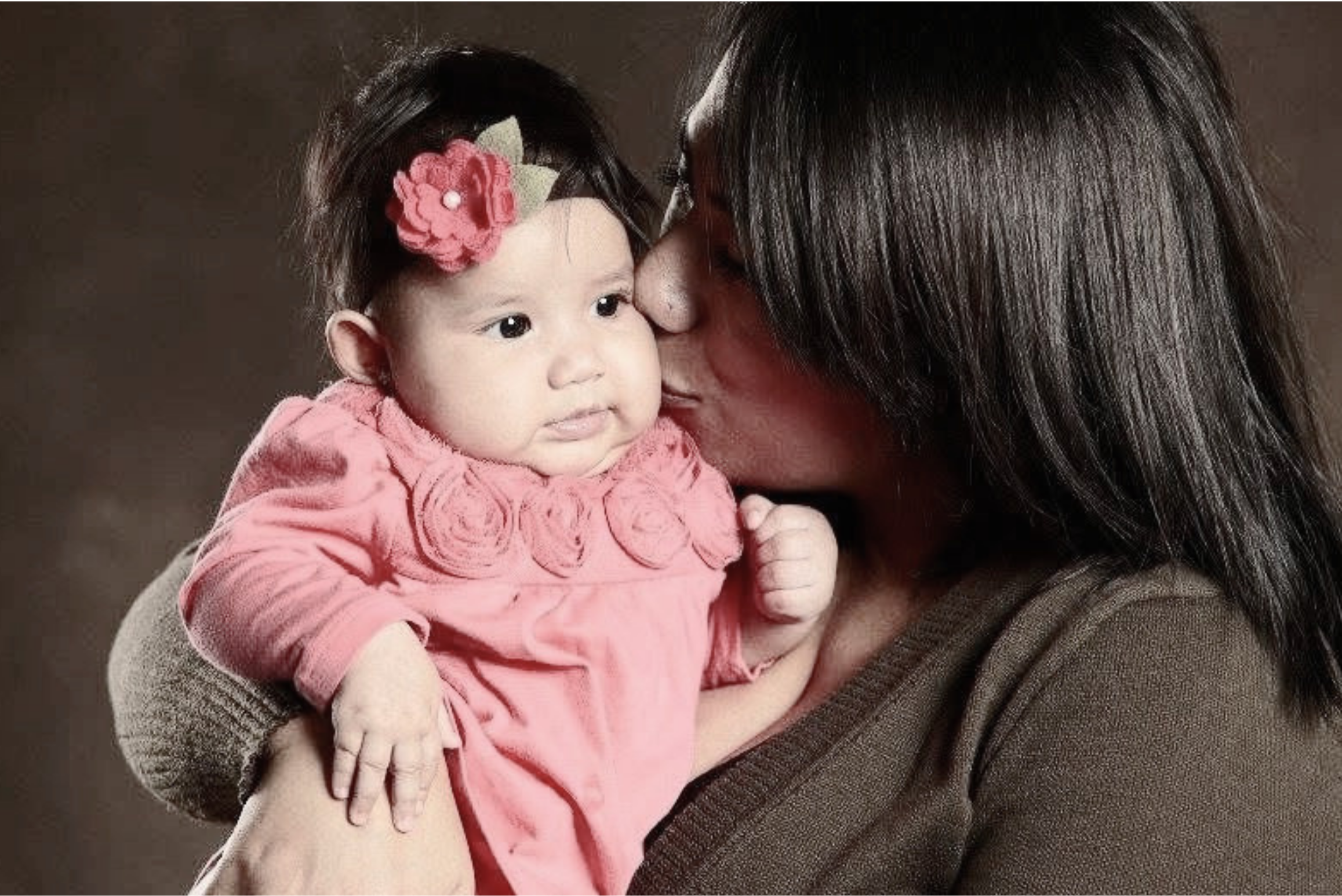
She was 21 years old.
“Then came the worries, the what-ifs and the question: How am I going to do these things on my own?”
There is a particular kind of silence inside an empty apartment. Nothing yet carries a memory. There are no familiar routines and no evidence that the space will one day feel like home.
Doris entered that apartment with a six-month-old baby and began building a life from what she had.
She does not romanticize how difficult that period was. But she also refuses the assumption that remaining in a relationship- any relationship would have automatically made motherhood easier.
Leaving did not mean she had failed to create a family. It meant she had chosen not to build one on dishonesty.
“ Mejor sola que mal acompañada.
It is better to be alone than in bad company.
I truly believe that.”
The Love That Carried Them
Doris raised Eva as a single mother, but she did not raise her without extended love.
Her father, she says, was an especially present source of support during Eva’s early years. His involvement helped Doris care for herself, find work and return to school while giving Eva another loving role model. Her mother and sisters helped. Friends became family, and family grew beyond blood.
Doris wanted Eva surrounded by people she trusted; people who loved her daughter and understood that supporting a child also meant supporting the mother raising her.
That support did not always arrive as a dramatic rescue. Sometimes it was a friend ordering pizza, sitting beside her while she breastfed and allowing her to be quiet.
“We think having support means people doing things for us,” she says. “But sometimes it’s just having someone come and sit on your couch. To be quiet and sit with you in silence can be so life changing.”
Her Mayan and Latinx heritage was deepened by the community she lived within in Brazil.. Motherhood gave that understanding new depth. Doris learned that a village is not merely a large group of people around you. It is made of people whose presence allows you to feel protected, respected and less alone.

She also learned that community and boundaries must exist together. Family could offer wisdom, tradition and care, but Doris still had to decide what was right for herself and Eva. She needed a village that could support her without taking her authority away.
When Doris considers what Eva received from growing up around extended family, friends and mentors, her answer is simple: love.
She now sees that love reflected in the young woman Eva has become; a daughter who cares deeply about her people and knows how to stand firmly in what she believes.
“She is loving, but she is also feisty,” Doris says. “It is beautiful to see how kind and fearless she has become.”
From Intuition to Purpose
The intuition Doris relied upon during pregnancy and birth eventually became central to how she supports other women.
She trained as a nurse and learned the clinical realities of pregnancy, birth and the human body. She valued that education, but she also noticed what a strictly medical understanding could leave unseen.
“Nursing taught me the textbook version of what happens to the body physically,” she says. “What it did not tune into was what happens mentally, spiritually and emotionally.”
Doris saw how easily a person could become a patient, a condition or a body requiring intervention. The focus could turn toward making the body progress faster rather than understanding what the woman might need.
Doris believes birth should not be rushed. She describes it as a tunnel a woman must travel through. There will be light at the end, but the journey itself matters.
Her Mayan and Latinx heritage reinforced what she already felt: birth, motherhood, healing and community are connected. There is no single correct path through any of them.
“You have to tap into your intuition,” she says. “This is a time when you are required to listen within.”
Her path toward becoming a doula was shaped by her professional training and personal experience. Brazil was her first exposure, to midwives, doulas, and traditional healers, then came supporting her sister-in-law through home births, she witnessed a form of care that felt intimate, intuitive and whole. A midwife recognized something in Doris and told her she would make an excellent midwife or doula.
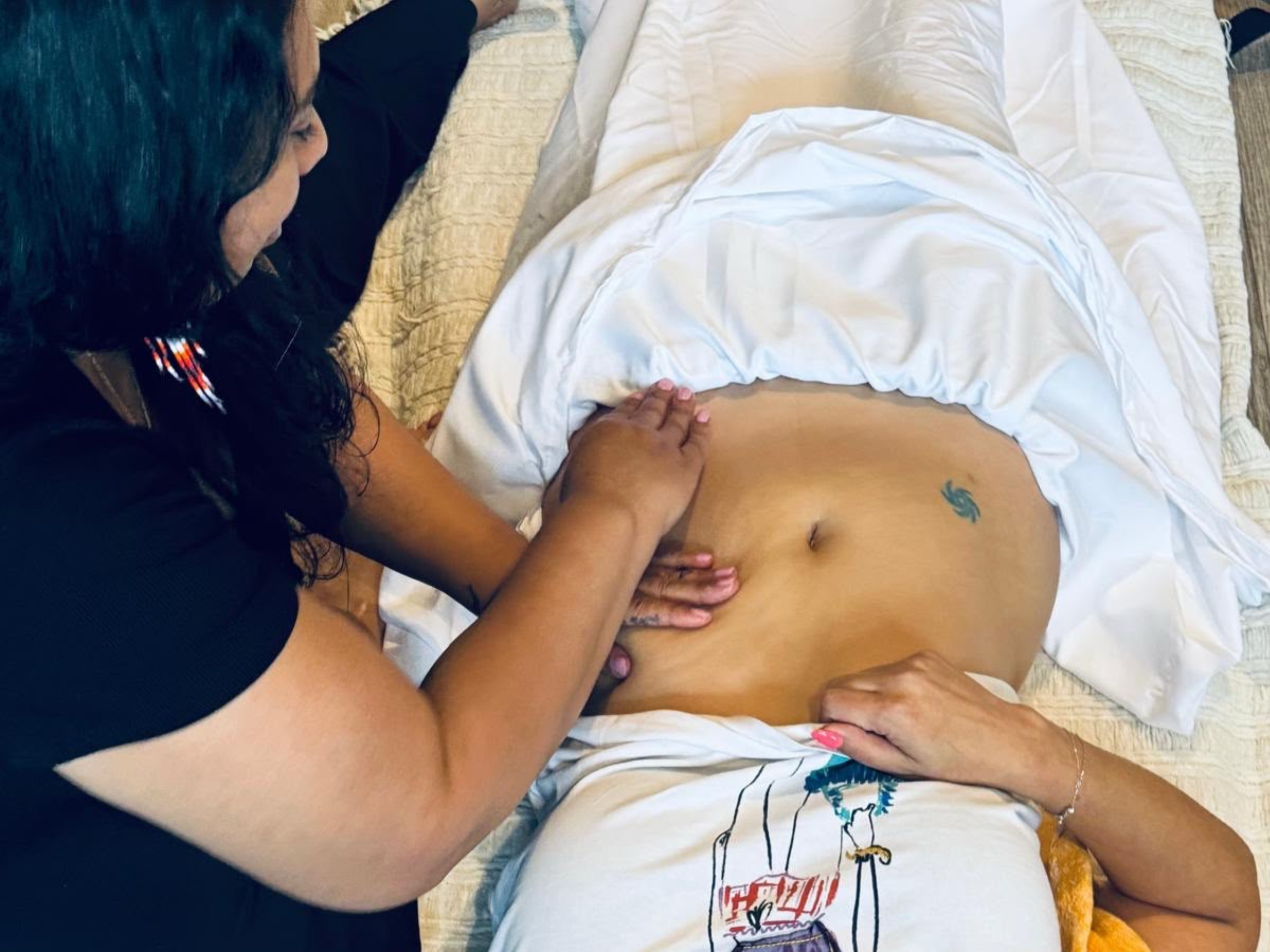
Doris listened.
As a doula, she does not want to replace a mother’s instincts with her own authority. She wants to help the woman locate the knowledge and power already within her.
“I want to hold her hand and say, ‘There is another path that may be more empowering for you, and that path is within you. You have it in you. Let me help you find it.’
Her experience as a single mother gives her a particular connection with women entering motherhood without a partner. Some consciously choose single motherhood. Others begin pregnancy expecting someone to remain beside them and discover that they will have to continue alone.
Doris understands the fear, the responsibility and the private questions accompanying that realization. When she steps into a space where a partner might otherwise have stood, she does not take it lightly.
“They may not have chosen to become single mothers,” she says, “but they deserve to be protected and supported at all costs.”
Her work also centres a person who can quickly disappear after birth: the mother.
Once a baby arrives, attention naturally turns toward the child. Visitors ask about the baby, reach for the baby and admire the baby. The woman who carried and delivered that life can begin fading into the background almost immediately.
“It really does not take much for a mother to go unseen,” Doris says.
But it does not take much to help her feel seen either.
A meal. A sincere question. Someone asking whether she has eaten, showered or slept. A person willing to sit beside her without expecting anything.
Doris remembers supporting a mother who had family members surrounding her with practical help. Yet the woman later told Doris that it was Doris’s quiet presence that made her feel safe. She knew that if she needed something, Doris was there.
Sometimes the most meaningful thing Doris could offer was silence.
“What stays with you is how you felt,” she says.
A Love That Could Hold Her
Before Rachel entered her life, Doris had stopped centering romantic love.
Her experiences had taught her to be careful about the people she welcomed into the world she had built with Eva. She wanted relationships rooted in curiosity rather than judgment. She wanted people who understood that loving her also meant respecting her daughter, her history and the life she had worked to create.
Doris had also spent years navigating her sexuality and understanding her identity. Allowing herself to consider a healthy partnership with a woman opened a possibility she had not always imagined.
Meeting Rachel, she says, “was a breath of fresh air.”
Rachel did not arrive to save Doris. Doris had already made a home, raised her daughter, returned to school and created a career.
What Rachel brought was partnership.
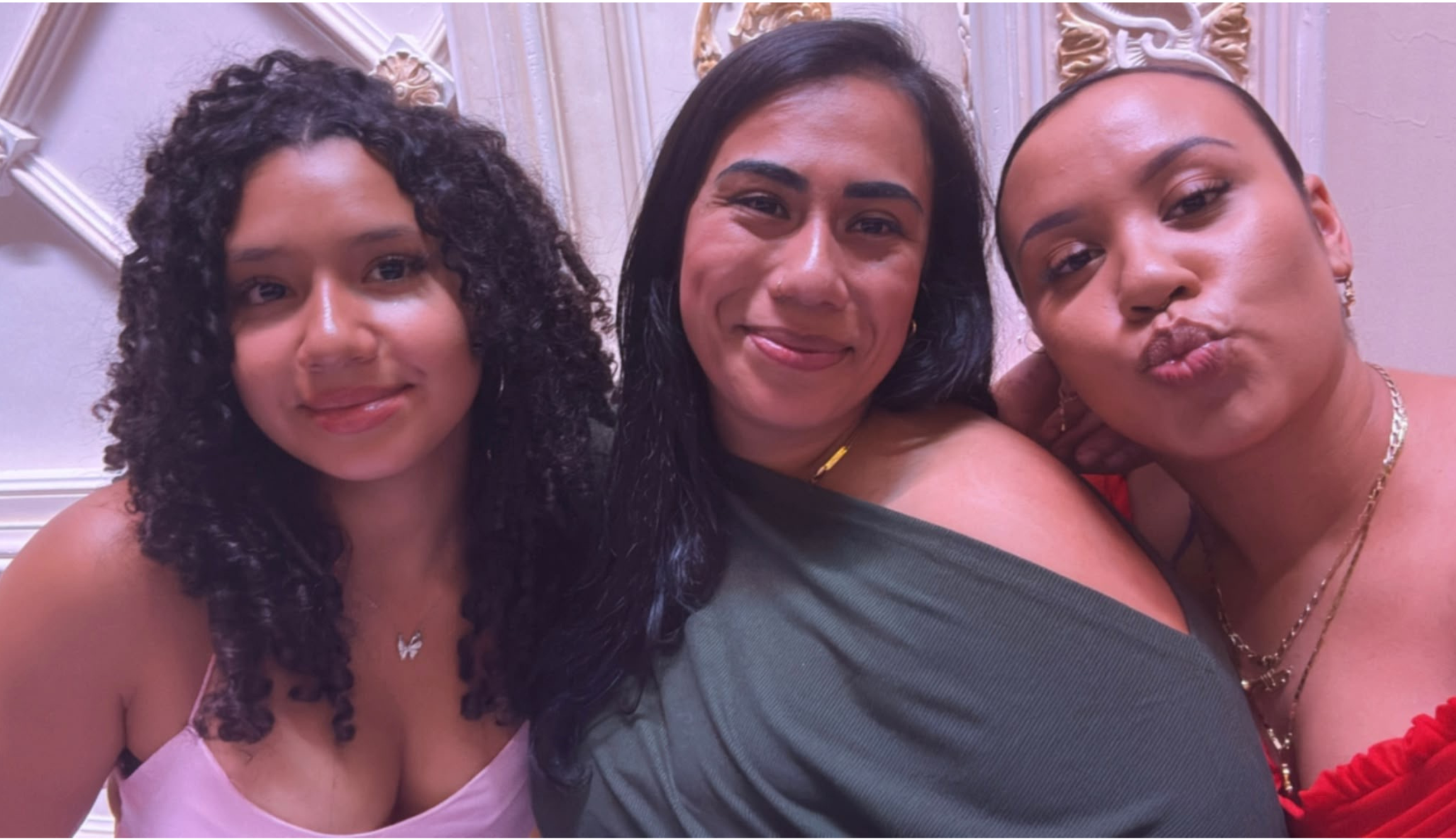
Doris finally had someone beside her with whom she could admit that she did not always know what she was doing. They could reconsider a parenting decision, talk through a difficult conversation and laugh together about the fact that neither of them had all the answers.
“It’s my first rodeo,” Doris says. “I still don’t know what I’m doing sometimes.”
With Rachel, she could ask to be supported, held or simply heard. She no longer had to carry every question privately.
Their relationship also expanded Doris’s understanding of family. Family was not one fixed structure. It could take many forms as long as its foundation was love and respect.
Doris explains it with a metaphor that is entirely her own.
Love, she says, is the base of the salad. It is the lettuce but no one wants to eat only lettuce. A relationship also needs the carrots and tomatoes: effort, honesty, communication and the daily choices that allow love to become a life.
That is what she hopes Eva learns from watching her and Rachel. Love does not make everything effortless. Healthy love creates a foundation upon which identity, honesty and belonging can grow.
Doris wants Eva to feel proud of who she is and where she comes from. She also wants her to understand that she will not belong everywhere and that she does not need to.
“She will find her people,” Doris says. “She will find her community. She will find the place where she is loved and feels that she belongs.”
“Love can look like anything. Family can be anything.”
The Legacy She Is Building
Doris once left home because she was willing to step beyond the life she knew and placed herself in the service of another community..
She moved to Brazil for meaningful work, supporting sex workers and their children, and stepped into a life far beyond what was familiar.
It was there that she met the man who would become the father of her child. When the relationship revealed itself to be something different from what she believed, Doris found the courage to choose herself and her unborn daughter. She returned to Canada carrying uncertainty, but also the convictions that would shape the rest of her life.
She built a home inside an empty apartment.
She built a village from family, friendship and chosen community.
She built a career that transformed her hardest-earned knowledge into protection for other women.
She built a healthy partnership without pretending that love alone is enough.
And she raised a daughter who is loving, caring, feisty and unafraid to stand inside her own beliefs.
That is Doris’s legacy, not that she endured everything without fear, but that fear did not make her abandon what she knew was right.
For much of her life, Doris has cared for other people: Eva, her family, her patients and the mothers who trust her during some of their most vulnerable moments.
Learning to include herself in that care is the next part of her story.
She began therapy and made space to speak about grief and loss. She returned to the things that grounded her: reading, walking, moving her body and spending intentional time with her immediate family. She also began practicing the boundaries she had spent years encouraging other women to establish.
When I asked Doris who she is becoming, her first instinct was to reach for the language so often used to celebrate women who have survived difficult things.
“My first thought was, Doris is becoming a badass bitch,” she says.
Then she stopped herself.
“Actually, I don’t want to be a badass bitch anymore.”
There is something quietly radical in that correction.
Women like Doris are often praised for how much they can carry. We admire their endurance without always asking what it has cost them.
Doris is no longer interested in proving her strength through exhaustion.
The woman emerging now is softer, quieter and no less ambitious. She is the Doris who spends Saturday night reading a book. She is a businesswoman who knows what she wants. She is learning that softness, success, motherhood and ambition do not have to compete for space within her.
She is not chasing the life she wants as though it is always moving away from her.
“It has always been there,” she says. “It is right in front of me.”
Then, with the humour and honesty that run through every part of her story, she names the woman she is becoming:
“The soft, money-making Doris.”
Not a woman made powerful by how much she can carry.
A woman powerful enough to put some of it down.
Learn more about Doris and her work at La Luna Doula Services →